
the method.
At speakwithbrain., I use Neurolanguage Coaching® to help adults develop their English or French, speak with more confidence and communicate more clearly.
Sessions connect language development with real-life speaking practice. We work on finding words, expressing ideas naturally and using the language you already know, with new vocabulary and structures introduced around your goals. Workplace conversations, meetings and presentations can be part of this work when relevant to you.
The approach focuses on emotional safety, clarity and your pace. Here, I answer common questions about learning and speaking English or French.
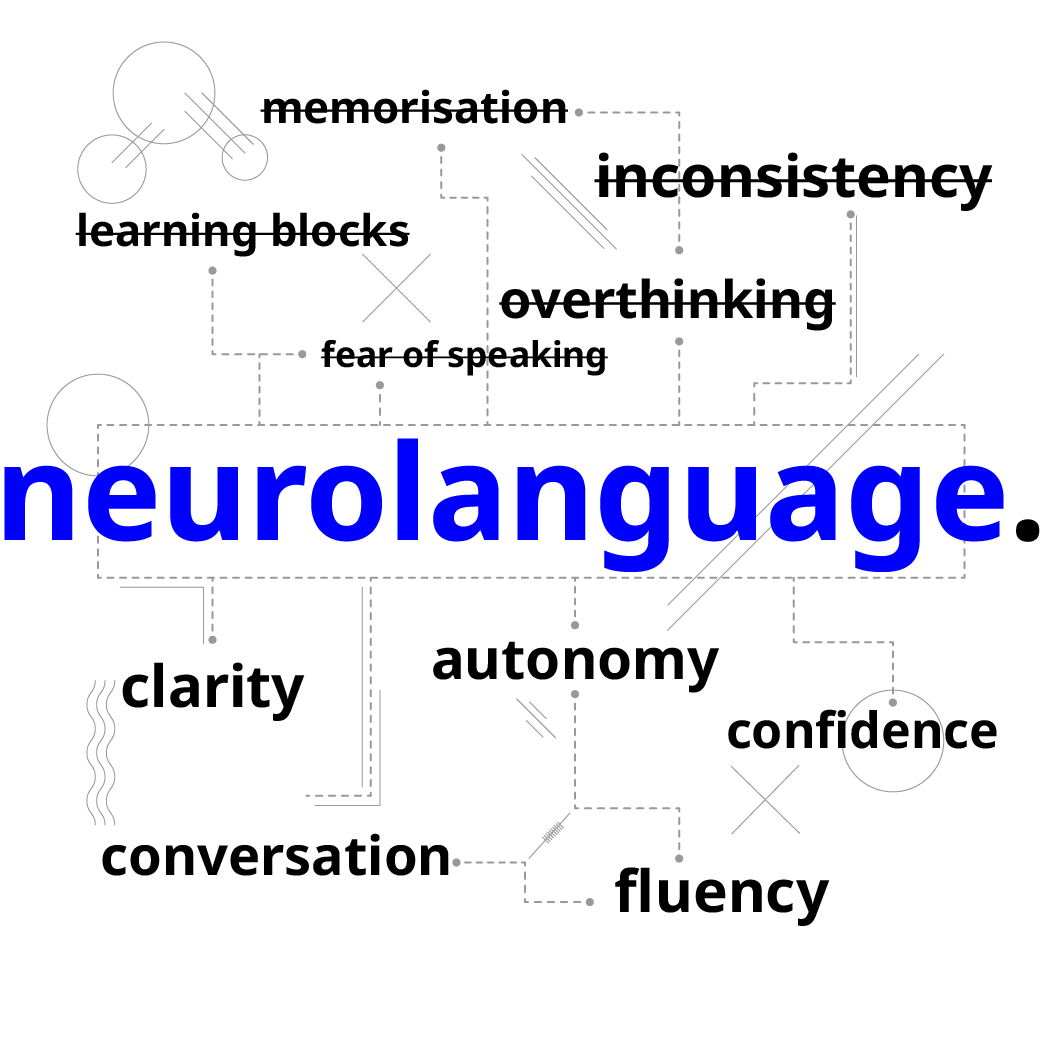
What this method is (and is not).
Is this language teaching or coaching?
- If you need grammar, we work on grammar.
- If you need to speak more confidently, we practice speaking.
- If you feel blocked or stuck, we work on that first.
The goal is not just to “cover content”, but to help you make real, sustainable progress.
Is this based on neuroscience?
Yes, Neurolanguage Coaching ® is based on neurosciences, but in a practical way. We use what we know about how the brain learns: attention, memory, emotion, stress and motivation.
- If stress blocks you from speaking, we reduce pressure.
- If you forget vocabulary quickly, we adjust how you review it.
- If you feel overwhelmed, we simplify your learning plan.
It’s less about theory and more about what works in day-to-day life.
Why do I understand English or French but struggle to speak?
Understanding English or French and speaking it are different skills. You may recognise words when listening but struggle to find them in a conversation. Translating in your head, overthinking sentences or worrying about mistakes can add to the difficulty.
In coaching, we practise conversations that matter to you and work with the language you already know. I help you find ways to express your meaning, then introduce useful vocabulary or sentence structures in context. We also work on reducing pressure so you can participate with more confidence.
What if I've tried everything and nothing worked?
Then we look at what hasn’t worked and why. Sometimes the problem is strategy over effort. Instead of adding more apps, more rules, or more exercises, we identify what’s blocking your progress and adjust your approach. Often, small changes in how you learn create much bigger results.
Your role and my role.
Learning a language is an active process.

You are the driver
You are not a passive recipient.
I am the GPS
I guide you, without taking control.
Choose your direction
You define what matters, based on your context and goals.
I listen and locate
Together, we identify where you are in your learning process.
Set your pace
Progress happens at a rhythm that works for you.
Guidance
I help you move forward with clarity.
Decide your limits
You decide how far you want to go, and how much you take on.
Integration
What you learn becomes natural, usable, and yours.
How sessions work.
Do I already need a high level?
Neurolanguage Coaching® adapts to your level, your rhythm, and your emotional experience with the language.

In which language sessions are conducted?
What happens during a first session?
The first session is a time to get to know each other and clarify what you need.
- We talk about the language you want to work on, why it matters to you, and what has been difficult so far.
- I explain how neurolanguage coaching works, how we’ll collaborate, and what you can expect from the process.
- We begin to define your goals and explore how you experience the language, sometimes through simple reflection or visualisation exercises.
There is no pressure to perform and no level test. Everything starts from where you are.
Mistakes, grammar and learning fears.
Will you correct my mistakes?
I don’t interrupt you to correct every mistake. Expression comes first. Once you have said what you want to say, we decide together whether feedback or rephrasing would be helpful.

I hate grammar. Do we have to go through this?
No, not in the way you probably experienced it at school. Neurolanguage Coaching® does not start with grammar rules. We focus first on helping your brain feel safe enough to speak. We don’t focus on grammar as a separate subject. Structure is approached through use and context, so it integrates naturally without interrupting expression.
Many learners discover that once pressure is reduced, grammar starts to make sense naturally without memorization or frustration.
I feel like I am too old to learn a new language.
You’re not too old. Age is not the problem, stress and self-judgment are. Adults often learn differently from children, but not worse. With the right conditions, the adult brain is perfectly capable of learning, adapting, and expressing itself in a new language.
The Method is designed specifically for adult learners, respecting your rhythm, your experience, and your way of thinking.
Any questions? Feel free to contact me.

Neurolanguage Coach® et Neurolanguage Coaching® are American and European registered marks established by Rachel Marie Paling.
Privacy Policy and Terms of Service